2023
About the Program
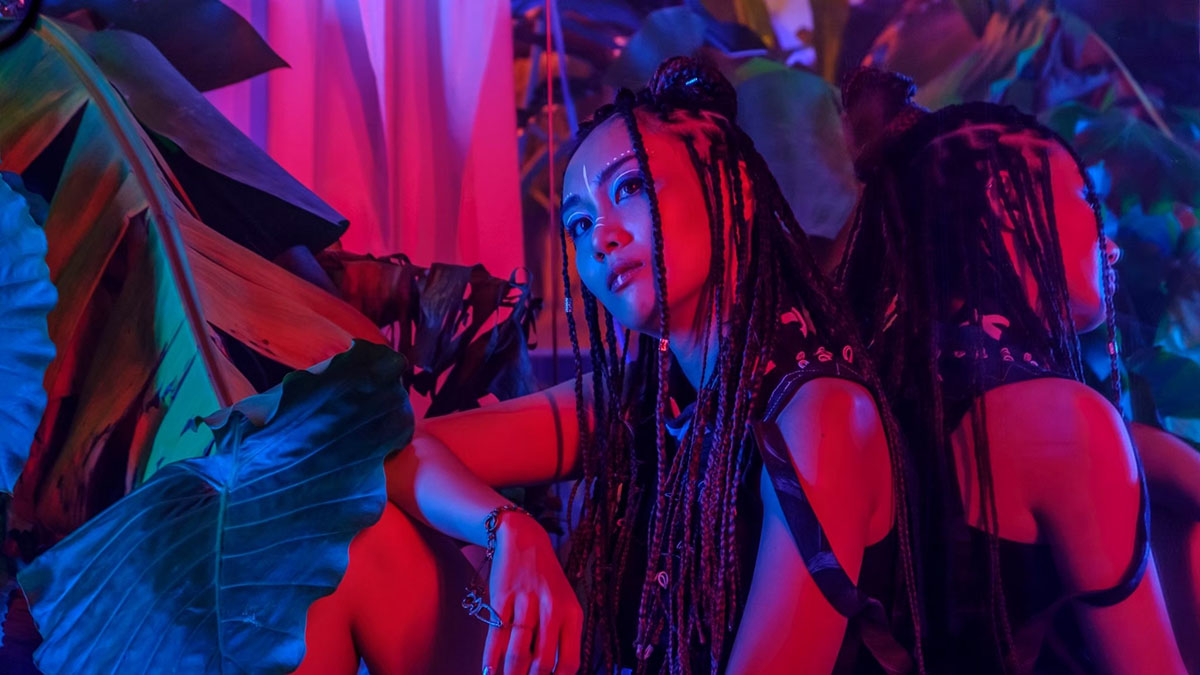
“Why can’t electronic music merge with Indigenous music?” This question spins like a record in Dungi Sapor’s head. And so, Dungi began experimenting with electronic music as the background, inviting the elders of her tribe to adapt and re-interpret the traditional melodies of their ancestors. This became the first single of great significance in her life.
As an Indigenous person, she has experienced invisible discrimination when she was growing up. But the tenacity of Cikusuan people flows in her blood, and she does not want to forget her pride and uniqueness. She even had the name “Cikusuan” tattooed on her body, a constant reminder of who she is and where she came from.
In the traditional songs of the Amis people, there is a ballad called “Farewell Song”, which tells the story of the tribe’s farewell to the young people conscripted to fight in Nanyang during the Japanese colonial period. It is full of melancholy for the parting. As change comes with time, young people heading off to the military have a different attitude than in the past. Dungi still hopes that the younger generation will not forget these stories experienced by their ancestors. This historical memory resonates with the forgotten and unsung heroes of Indigenous Canadians in North America’s war history. Using pop music elements to narrate the past, Dungi aims to make connections across generations.
DJ Dungi Sapor strives to find new ways to bridge tradition and contemporary culture. She travels all over the world, exploring and learning with curiosity, resulting in many wonderful in-depth exchanges with various cultures. She believes this process will lead to exciting new discoveries and unique ideas, and to a richer fusion of traditional and modern cultures. She looks forward to bringing these inspiring experiences back to the stage in creative and refreshing ways. Get ready, world, to listen to her one-of-a-kind musical journey!
DJ Dungi Sapor grew up in the glorious Cikasuan village of the Amis tribe in Hualien. She was discriminated against and excluded by her peers because of her Indigenous identity when she was a child, but this did not destroy her confidence in her identity. She even studied finance law in hopes of helping her tribe and her people, and was also briefly an assistant at the National Congress of Taiwan. By reinterpreting and innovating with new music, she integrates Indigenous culture into contemporary sound, breaking the stereotype of Indigenous music. At the same time, she appreciates the traditional sounds of the world’s Indigenous population. She is currently experimenting with integrating the hand drum of the Indigenous Peoples of Canada, and will be sharing her new creation for the first time at this event.
From the Curating Team
How have migration, war, and conflict impacted culture and social values of today? This year at TAIWANfest, we dive into the significance of Taipei's National Palace Museum, Taiwanese diaspora during the Japansese colonial period, recovery of Indigenous culture, and other Taiwanese history. Through this, we examine identity, social values, and contemporary challenges, fostering international dialogue and respect for cultural diversity.
Contact Us
Performance / Vendor / Sponsorship Opportunities

TAIWANfest Toronto is grateful to be held on the traditional, ancestral, and unceded territories of many nations, including the Mississaugas of the Credit, the Anishnabeg, the Chippewa, the Haudenosaunee and the Wendat peoples, that is now home to many diverse First Nations, Inuit and Métis peoples. We acknowledge our privilege to be gathered here, and commit to work with and be respectful to the Indigenous peoples of this land while we engage in meaningful conversations of culture and reconciliation.