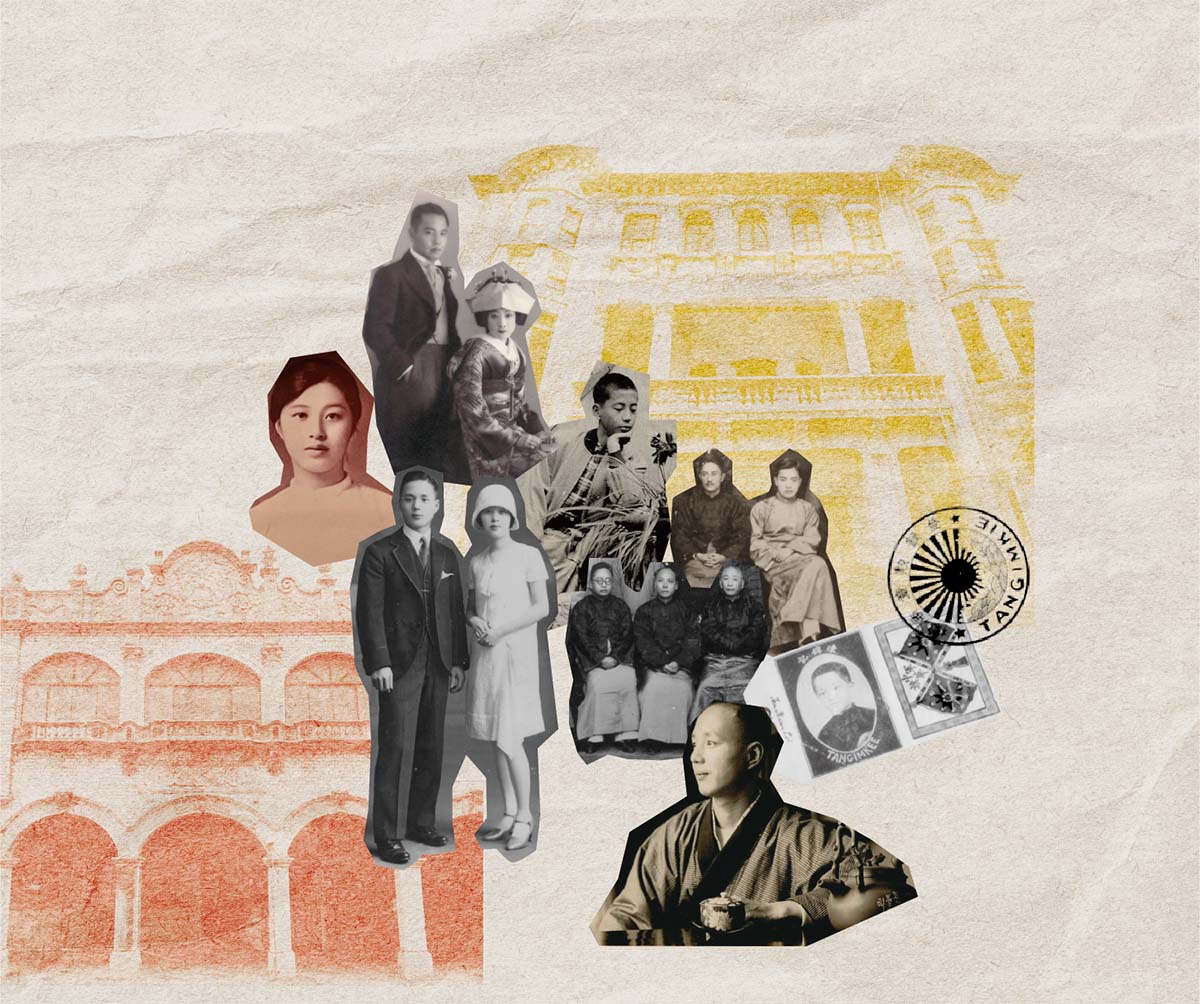
During the Qing Dynasty, women had to bind their feet in order to marry into wealthy families. However, after Japan colonized Taiwan, footbinding was viewed as a barbaric practice, and daughters with unbound feet were chosen to attend important events in place of their mothers.
In traditional society, maids would accompany young ladies to their husband’s homes. If the young lady was unable to conceive, the maid might become the husband’s second wife, in order to produce an heir…
Starting with his mother, Chen Bao-chai, author Zhou Zong-wu depicts the history of two families spanning three generations: one is a tea merchant family in Taipei, and the other a rice merchant family in Hsinchu. The author interweaves these family stories into the larger historical backdrop, from Taiwan’s tea export to various parts of the world, to Japan’s colonization of Taiwan and the outbreak of World War II.
Through this book, we can see how the real-life trajectories of the merchant families in that era were influenced by the cold realities of international politics. What progress, in terms of equality and freedom, did the women make across the three generations? What roles in the family did they bear, and how did they rewrite the destinies of their darling daughters?

Passionate about communication, music, and storytelling, Zhou Zongwu was born in Hsinchu City, Taiwan, on Beimen Street, in the rice business of Zhou Yi Ji. He is the fourth son of Chen Baochai, the protagonist of “A Tale of Two Mansions.”
After graduating from university, Zhou Zongwu joined the American multinational chemical company, Dow Chemical Co. After retirement, he settled in Vancouver for eighteen years, engaging in music-related work and participating in cultural exchange activities between Taiwan and Canada.
He currently has three life plans: first, to establish the “325 plus” club, joining friends who have reached the age of 75 to jointly manage the latter half of life and advocate SCSR (Senior Citizen Social Responsibility); second, to produce an album featuring his own compositions and translated lyrics; and third, to document the family story into a book, namely, “A Tale of Two Mansions.”
Harassment rooted in bureaucracy and social values subtly infiltrates women's lives, urging them to prioritize the collective or accept "cultural traditions." Works like The Handmaid’s Tale and Tan-Tsiu-Niu highlight ongoing gender oppression. This year's Taiwan Bookstore focuses on "women," "history," and "reflection," inspired by the #MeToo movement and explores gender-based violence and marginalized women's stories. How can we create change for our daughters?

TAIWANfest Toronto is grateful to be held on the traditional, ancestral, and unceded territories of many nations, including the Mississaugas of the Credit, the Anishnabeg, the Chippewa, the Haudenosaunee and the Wendat peoples, that is now home to many diverse First Nations, Inuit and Métis peoples. We acknowledge our privilege to be gathered here, and commit to work with and be respectful to the Indigenous peoples of this land while we engage in meaningful conversations of culture and reconciliation.