2023
About the Program
What is your first impression of the National Palace Museum of Taipei? As an institution that collects historical cultural treasures, how do they break the long-standing framework, connect with the contemporary, and attract the attention of youth? How does the National Palace Museum establish its roots in Taiwan, and at the same time transcend geographical restrictions to communicate with the world?
As a cultural treasure that was once subject to closed governance, the National Palace Museum is now moving towards a new policy of publicity and cultural equality. Through international sharing and innovation, the National Palace Museum is showing its vitality in contemporary society. The Museum is also gradually integrating Taiwanese local elements to form a unique Taiwan-styled National Palace Museum. The localization process of the Museum is an issue worthy of our exploration. Through promoting community participation, a Taiwan-centered cultural sharing platform is created, and more people can benefit from the rich cultural resources of the National Palace Museum.
By passing on arts, crafts, and historical stories to the future generations, the National Palace Museum enhances the cultural heritage of Taiwan. In recent years, the National Palace Museum has used innovative digital technology to infuse modern elements with traditional culture, creating a modern and attractive cultural experience where young people can feel the charm of the traditional culture, and further promoting cultural inheritance.
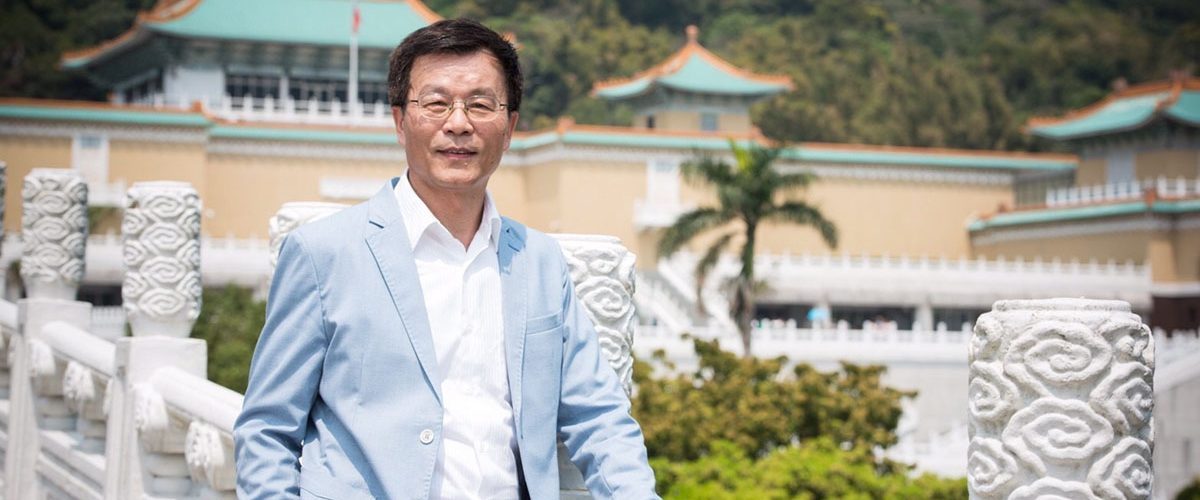
During his tenure as the director of the National Palace Museum, Lin Jeng-Yi put forward the policy concept of “publicization of the National Palace Museum” to strengthen the new connections between the Museum and international and local cultures. He is committed to creating new value for the Museum. Director Lin will personally share with Canada how the National Palace Museum has transformed into a new form of openness, inclusiveness, and innovation. Let us unveil this new National Palace Museum together and witness the wonderful intersection of this ancient treasure house with the modern world.
Mr. Jeng-Yi Lin has held many important positions in his life: Director of the National Palace Museum, Director of the National Taiwan Craft Research and Development Institute, Director of the National Taiwan Museum of Fine Arts, Chief Secretary of the Cultural Construction Committee of the Executive Yuan, and General Director of the Chimei Museum. He has an academic background in journalism, literature, and cultural heritage. With over 30 years of experience in Taiwan’s cultural and artistic field, he possesses bountiful experience in adapting operational management strategies to respond to changes in Taiwan’s social landscape, as well as engaging in international dialogues.
Driven by the vision of constructing Taiwan’s cultural subjectivity and promoting art education, his endeavors include conducting research, collection, exhibition, and educational work on Taiwan’s history and culture. He has also advocated for research and educational promotion centered around Taiwanese art, as well as the modernization and internationalization of Taiwanese craftsmanship, to establish Taiwan’s position in the international realm. He has proposed the concept of “publicization of the National Palace Museum” to strengthen its connections with international and local cultural innovations.
From the Curating Team
How have migration, war, and conflict impacted culture and social values of today? This year at TAIWANfest, we dive into the significance of Taipei's National Palace Museum, Taiwanese diaspora during the Japansese colonial period, recovery of Indigenous culture, and other Taiwanese history. Through this, we examine identity, social values, and contemporary challenges, fostering international dialogue and respect for cultural diversity.
Contact Us
Performance / Vendor / Sponsorship Opportunities

TAIWANfest Toronto is grateful to be held on the traditional, ancestral, and unceded territories of many nations, including the Mississaugas of the Credit, the Anishnabeg, the Chippewa, the Haudenosaunee and the Wendat peoples, that is now home to many diverse First Nations, Inuit and Métis peoples. We acknowledge our privilege to be gathered here, and commit to work with and be respectful to the Indigenous peoples of this land while we engage in meaningful conversations of culture and reconciliation.